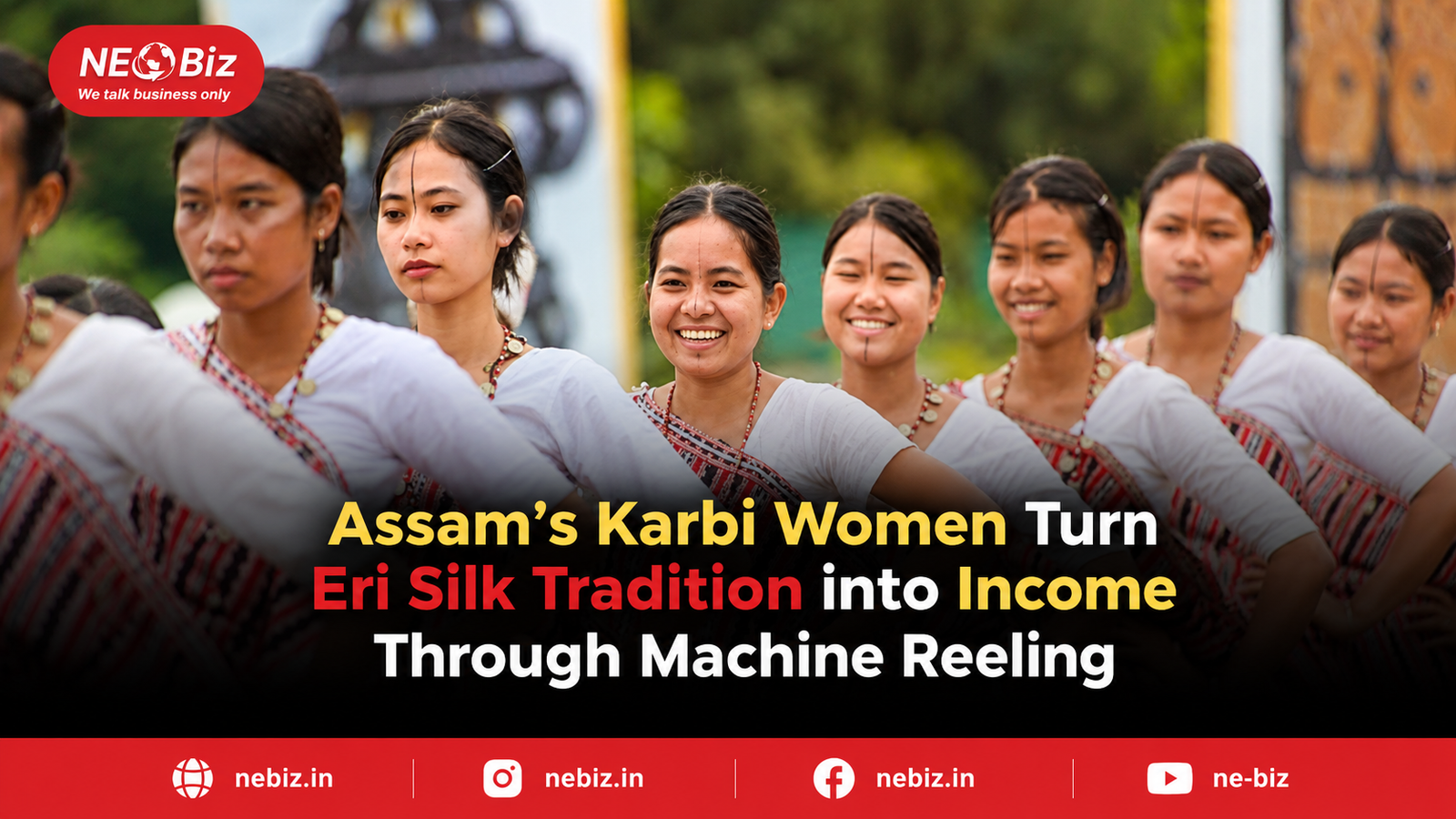
Assam’s Karbi women are increasingly combining traditional Eri silk practices with modern techniques to create new livelihood and income opportunities. By learning machine-based reeling, women involved in the region’s silk ecosystem are gaining access to faster and more efficient methods of processing Eri silk while continuing to remain connected to a craft that has been passed down through generations.
Eri silk, often associated with Assam’s indigenous textile traditions, holds both cultural and economic significance in the state. The production process involves several stages, from rearing silkworms and collecting cocoons to spinning, reeling, weaving and creating finished textiles. Traditionally, many of these activities have depended on manual skills and community-based knowledge.
The introduction of machine reeling provides an opportunity to improve productivity and make the process less labour-intensive. For women already engaged in silk-related activities, acquiring technical skills can help them participate more effectively in the value chain and potentially increase the economic returns from traditional silk production.
For Karbi communities, Eri silk is more than a commercial product. It is closely connected with cultural identity, traditional clothing and indigenous knowledge. The growing effort to combine traditional craftsmanship with modern production methods could therefore help preserve cultural practices while making them more commercially viable.
The development also highlights the broader role of women in Assam’s rural and traditional economy. Women have historically played an important role in weaving and textile production across the Northeast, and improved access to technology, training and markets can strengthen their participation in income-generating activities.
Machine reeling can also help address some of the challenges associated with traditional silk production, particularly the time and effort required for processing. Greater efficiency could allow producers to handle larger quantities of cocoons and respond more effectively to demand for Eri silk and related products.
Beyond primary silk production, the development has potential implications for the wider value chain. Increased production can create opportunities for yarn suppliers, weavers, designers, handicraft producers, retailers and businesses involved in marketing and selling traditional textiles. With growing interest in sustainable, handmade and indigenous fashion, Eri silk products could also find opportunities in premium and niche markets.
The initiative demonstrates how technology can be used not to replace traditional knowledge, but to strengthen it. By combining indigenous expertise with modern machinery and training, Karbi women can potentially improve productivity while retaining the cultural character of Eri silk.
For Assam’s broader handloom and handicrafts sector, such initiatives could contribute to the creation of sustainable rural livelihoods and encourage younger generations to remain connected to traditional occupations. Better commercial opportunities may also help ensure that indigenous textile knowledge continues to be passed on rather than gradually disappearing.
The experience of Karbi women in adopting machine reeling reflects a larger shift taking place across the Northeast, where traditional crafts are increasingly being linked with entrepreneurship, technology and modern markets. If supported by access to finance, training, design development and reliable markets, such efforts can help transform traditional skills into sustainable sources of income while preserving the cultural heritage of the region.