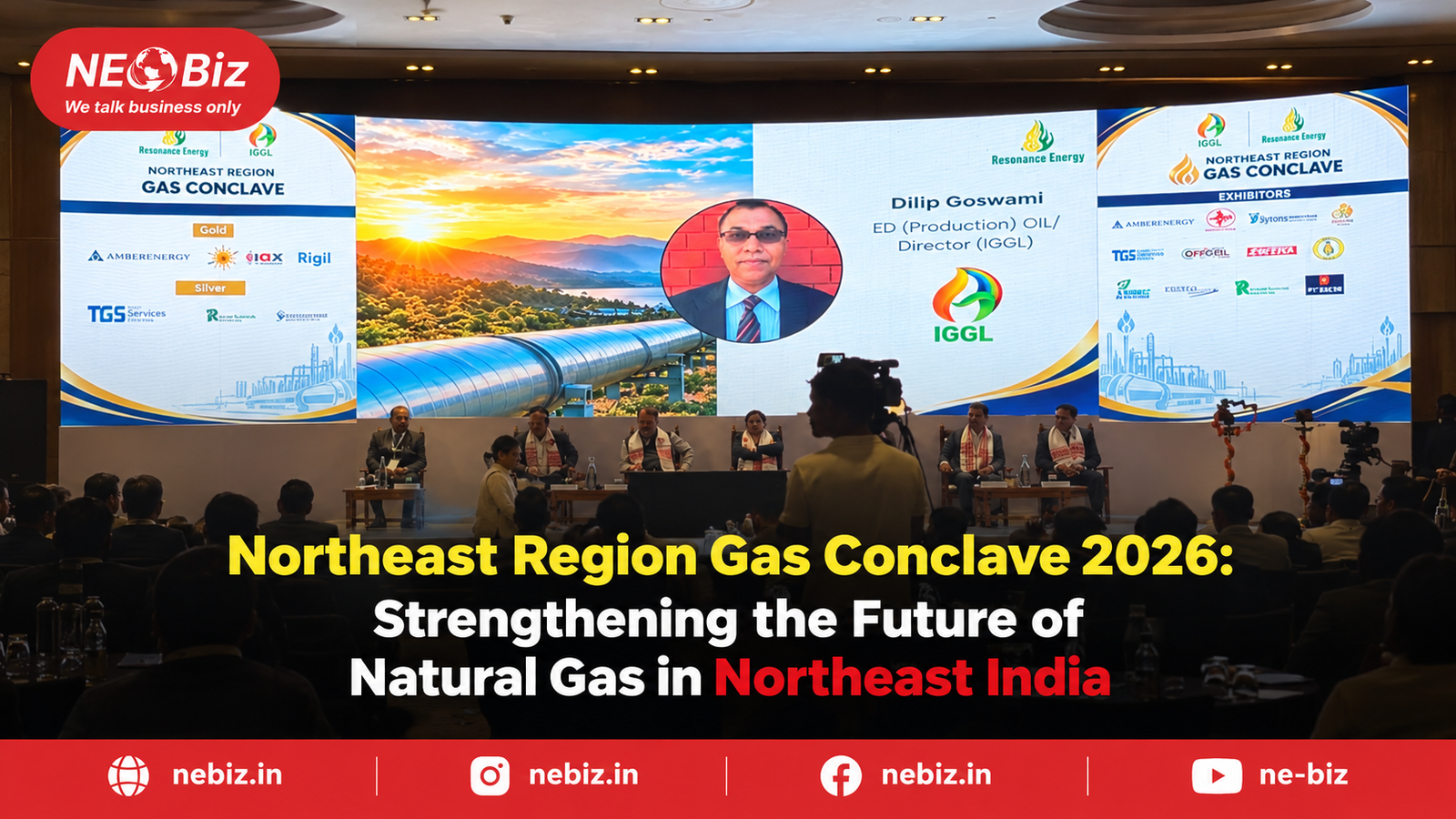
The Northeast Region Gas Conclave 2026 brought together industry leaders, energy sector professionals, policymakers and other stakeholders in Guwahati on October 9 to discuss the evolving natural gas landscape and the region’s growing importance in India’s energy sector. Organised by Resonance Energy in association with Indradhanush Gas Grid Limited (IGGL), the conclave provided a platform to deliberate on infrastructure development, regional connectivity, investment opportunities and the future of natural gas across Northeast India.
Held at Vivanta Guwahati, Taj, the event highlighted the need to strengthen the region’s gas infrastructure to support industrial development, improve energy accessibility and create new avenues for economic growth. With its natural resources and strategic location, Northeast India has significant potential to contribute to the expansion of India’s natural gas network and the development of a more diversified energy ecosystem.
A key focus of the conclave was the importance of expanding and strengthening natural gas infrastructure across the Northeast. Reliable pipeline connectivity and efficient distribution systems are essential to connecting gas sources with industries, commercial establishments and other consumers. Improved infrastructure can also help businesses access energy more efficiently, supporting industrial operations and long-term investment.
Indradhanush Gas Grid Limited plays an important role in developing the North East Gas Grid, a major initiative aimed at connecting the eight northeastern states through a natural gas pipeline network. Such infrastructure is expected to support the wider adoption of natural gas and improve connectivity between energy-producing areas and potential consumption centres.
The expansion of the gas network also has implications for sectors such as manufacturing, fertilisers, city gas distribution and commercial energy consumption. As connectivity improves, businesses may gain access to more reliable energy supplies, creating opportunities for industrial expansion and investment across the region.
The conclave brought together representatives from different segments of the energy and infrastructure ecosystem, encouraging discussions around emerging industry requirements and potential areas of collaboration. The event also featured exhibitors and participating organisations from the energy sector, offering opportunities to showcase products, services and technical capabilities.
The presence of industry participants underscored the importance of collaboration between infrastructure developers, technology providers, service companies and other stakeholders in advancing the region’s energy ambitions. Such interactions can help identify operational challenges, encourage knowledge-sharing and strengthen professional networks within the industry.
For Northeast India, the development of energy infrastructure extends beyond the availability of natural resources. It also involves building the supporting ecosystem required for transportation, distribution, industrial consumption and investment. Industry platforms such as the Northeast Region Gas Conclave provide an opportunity to discuss these interconnected requirements.
Natural gas is an important component of India’s evolving energy mix, offering applications across industrial, commercial and domestic sectors. For a region such as the Northeast, improved access to gas infrastructure can help support existing industries while attracting new investments in energy-intensive activities.
Better connectivity can also improve the prospects of businesses located beyond major urban centres by expanding access to energy networks and associated services. Infrastructure development may create opportunities for contractors, equipment suppliers, engineering firms, logistics providers and other businesses involved in the energy value chain.
The development of the natural gas ecosystem could therefore contribute to broader economic activity across the region. However, realising this potential will depend on continued infrastructure investment, effective implementation, market demand and coordination among public and private stakeholders.
The discussions at the conclave also reflected the wider importance of planning energy infrastructure in line with India’s long-term development priorities. As the country works towards meeting its growing energy requirements, natural gas continues to feature in discussions around fuel diversification, industrial competitiveness and energy transition.
For Northeast India, the challenge is to build infrastructure that meets present requirements while supporting future demand. Coordinated planning, technology adoption, efficient project execution and stronger industry partnerships will remain important to the development of the regional gas network.
The conclave served as a platform for stakeholders to exchange perspectives on these priorities and explore areas where cooperation could help advance the sector.
The Northeast Region Gas Conclave 2026 highlighted the importance of bringing together businesses, infrastructure developers and energy sector stakeholders to discuss the opportunities and challenges shaping the region’s natural gas industry.
As pipeline connectivity and energy infrastructure continue to develop, Northeast India has the potential to strengthen its position within the country’s broader energy network. Continued collaboration among industry participants will be important in translating infrastructure initiatives into practical opportunities for businesses, industries and communities.
The event reinforced the need for sustained engagement, investment and coordinated development to support a more connected and economically resilient energy ecosystem across the Northeast.