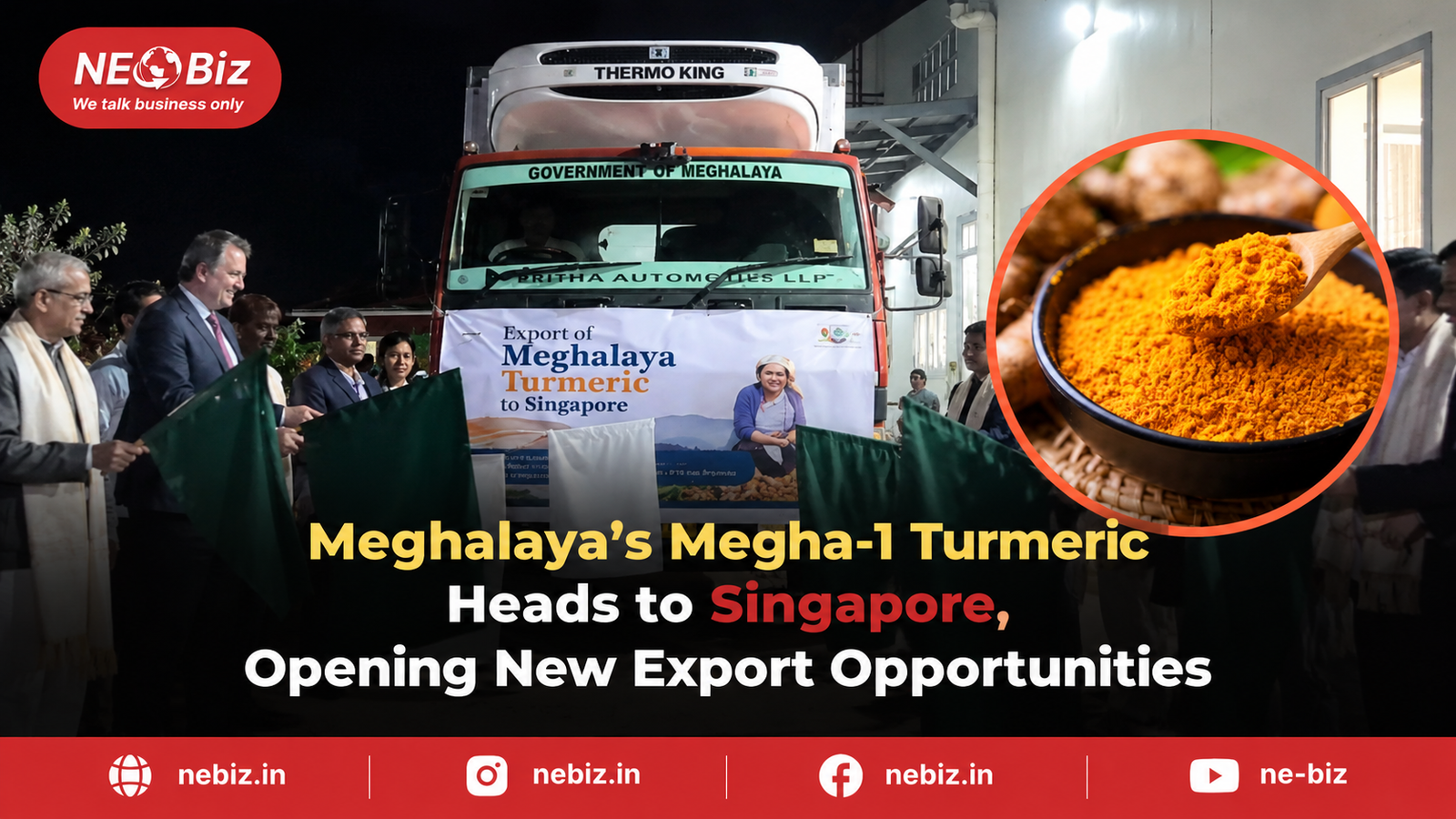
Meghalaya is expanding the international reach of its agricultural products with the dispatch of a consignment of Megha-1 turmeric to Singapore, marking a significant step towards connecting the state’s farming sector with overseas markets. The export initiative highlights the commercial potential of indigenous agricultural produce from Northeast India and the growing importance of international market access in strengthening rural livelihoods and agribusiness.
The consignment was flagged off in the presence of International Fund for Agricultural Development (IFAD) President Dr Álvaro Lario, highlighting the importance of institutional support in connecting local agricultural producers with global markets. The initiative also reflects ongoing efforts to promote Meghalaya’s distinctive agricultural products and create opportunities for farmers to participate in wider commercial supply chains.
Megha-1 turmeric is among the agricultural products that can help showcase the region’s farming capabilities to international buyers. Meghalaya is known for its turmeric varieties, including the widely recognised Lakadong turmeric, and the state has been exploring opportunities to increase the commercial value of its agricultural resources through improved production, processing and market linkages.
The shipment to Singapore represents an opportunity to strengthen the visibility of Meghalaya’s agricultural produce in international markets. Overseas demand can create new possibilities for farmers and producer organisations, provided they are able to meet buyers’ requirements concerning quality, consistency, packaging and supply volumes.
The initiative is associated with the Meghalaya Livelihoods and Access to Markets Project (Megha-LAMP), which focuses on improving livelihood opportunities and market access for rural communities. The project supports efforts to connect agricultural producers with buyers and strengthen the systems required to move products from farms to commercial markets.
The involvement of the Eastern Ri-Bhoi Organic Farmer Producer Company Ltd also highlights the role that farmer producer organisations can play in organising agricultural production and facilitating market access. Such organisations can help aggregate produce from farmers, coordinate supply and establish connections with buyers, potentially improving the ability of small producers to participate in larger markets.
For farmers, access to international markets can offer opportunities to diversify sales channels and reduce dependence on local demand alone. However, sustained export growth requires more than an initial shipment. Reliable production, quality assurance, efficient logistics and long-term relationships with overseas buyers are essential to maintaining a consistent presence in international markets.
Turmeric also offers considerable opportunities for value addition. Beyond the sale of raw rhizomes, processing into powder and other turmeric-based products can create additional commercial possibilities. Improved processing, packaging, branding and quality certification can help agricultural businesses develop products suited to different consumer markets.
For Meghalaya’s agribusiness sector, these developments could encourage greater participation by farmer groups, local entrepreneurs, food-processing businesses and logistics providers. Export-oriented agricultural activities can generate demand for services across the supply chain, including sorting, grading, storage, transportation, packaging and distribution.
The growing emphasis on market-oriented agriculture is particularly relevant to Northeast India, where diverse climatic conditions and indigenous crop varieties provide opportunities for specialised agricultural products. Connecting these products with domestic and international buyers can help create new income opportunities while encouraging greater investment in rural enterprise.
At the same time, expanding exports will require continued attention to production standards, traceability, market research and transport infrastructure. International buyers typically expect consistent quality and dependable deliveries, making coordination between farmers, producer organisations, processors and exporters essential. Building these capabilities can help transform individual export consignments into more sustainable commercial relationships.
The Meghalaya turmeric shipment to Singapore illustrates how regional agricultural products can find opportunities beyond their traditional markets when supported by institutional partnerships and effective market connections. It also underlines the importance of strengthening the link between agricultural production and commercial demand.
As Meghalaya continues to explore international markets for its agricultural produce, the long-term opportunity lies in building a dependable export ecosystem that benefits farmers, supports local businesses and improves the competitiveness of the state’s agricultural products. The initiative could serve as a foundation for further market exploration and value-chain development, subject to sustained buyer demand and the ability of producers to meet international market requirements.