Meghalaya is strengthening its ambitions to become an emerging technology and digital services destination in Northeast India through plans to expand its technology infrastructure, establish an Artificial Intelligence Centre of Excellence and attract Global Capability Centres (GCCs) and information technology companies. The initiative reflects the state’s efforts to diversify its economy, create skilled employment opportunities and encourage greater private-sector participation in the technology industry.
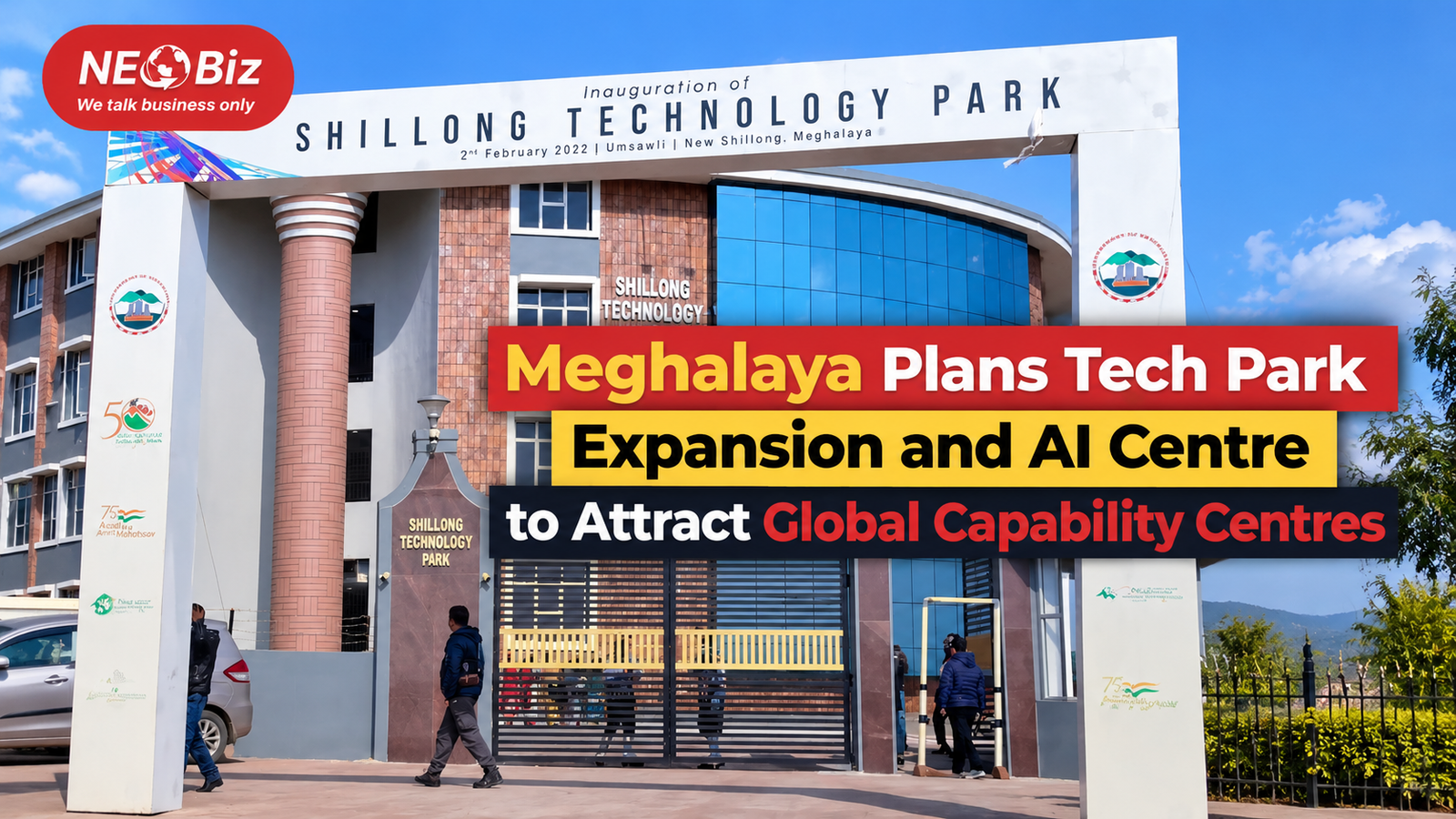
A key component of this strategy is the expansion of Shillong Technology Park, which is expected to provide additional workspace for technology businesses and companies looking to establish or expand their operations in the region. Shillong Tech Park-II, inaugurated in February 2022, adds approximately 1.8 lakh square feet of technology workspace and was developed with an investment of around ₹121 crore. The facility is intended to strengthen Meghalaya’s capacity to accommodate IT companies, digital service providers and other technology-driven businesses.
The expansion of technology infrastructure is significant for a state that is looking to create new avenues of economic growth beyond its traditional industries. Technology parks can provide businesses with office facilities, connectivity and an environment suited to digital operations. They can also encourage the development of supporting services, including professional consulting, recruitment, training, telecommunications and business support operations.
Alongside infrastructure development, Meghalaya is planning to establish an Artificial Intelligence Centre of Excellence with an investment of approximately ₹18 crore. The proposed centre is expected to support the adoption of AI technologies, promote technical skills and encourage the development of solutions that can be applied across different sectors. The initiative forms part of a wider effort to prepare the state's workforce and institutions for the growing role of artificial intelligence in business and public services.
Artificial intelligence is increasingly influencing industries such as finance, healthcare, logistics, customer service, manufacturing and information technology. Businesses are using AI-powered tools to improve operational efficiency, analyse data, automate repetitive tasks and develop new digital products. By investing in AI-related infrastructure and expertise, Meghalaya aims to build the capabilities required to participate in this expanding technology ecosystem.
Another important element of the state's approach is its plan to attract Global Capability Centres. GCCs are facilities established by multinational companies to manage specialised business functions, including software development, financial operations, data analytics, research, engineering and customer support. India has become a major destination for these centres, supported by its large talent pool, expanding digital infrastructure and established information technology sector.
For Meghalaya, attracting such companies could create opportunities to participate in the growth of India's technology and business services industry. GCCs can generate demand for skilled professionals in areas such as software engineering, cybersecurity, data management, finance, project management and business operations. Their presence can also create indirect employment opportunities for recruitment agencies, training institutions, office service providers and other businesses that support corporate operations.
However, attracting these companies requires more than the availability of office space. Investors generally evaluate the availability of qualified workers, reliable internet connectivity, transportation infrastructure, operating costs, regulatory conditions and access to business networks before selecting a location. Meghalaya's technology park expansion and proposed AI Centre of Excellence are intended to strengthen some of the foundations needed to compete for these investments.
The state's focus on technology-led development could also create opportunities for local graduates and young professionals. As companies expand their digital operations, demand may increase for workers with qualifications in computer science, information technology, data analytics, digital marketing, business administration and related fields. Partnerships between educational institutions, training providers and employers could help prepare candidates for these roles and improve access to specialised employment.
Developing a stronger technology ecosystem may also encourage entrepreneurship. Startups working in software services, artificial intelligence, digital commerce, education technology and other emerging fields could benefit from access to technical infrastructure and a more established network of businesses. A growing technology sector may help local entrepreneurs develop products and services for customers beyond Meghalaya, including markets elsewhere in India and overseas.
The economic impact of such developments can extend beyond the technology companies themselves. New business activity can increase demand for commercial property, transportation, hospitality, food services and other local services. Greater employment opportunities may also contribute to household income and consumer spending. These benefits, however, will depend on the number of companies that establish operations, the quality of jobs created and the extent to which local businesses and workers participate in the resulting economic activity.
Meghalaya's geographical position and its connection with the wider Northeast also make technology development relevant to the region's broader economic future. While major IT centres have traditionally been concentrated in larger metropolitan areas, improvements in digital connectivity and business infrastructure have created opportunities for emerging locations to attract selected technology operations. For smaller states, developing a competitive ecosystem requires coordinated investment in infrastructure, education, connectivity and the business environment.
The proposed AI Centre of Excellence could play a role in developing practical technology skills and encouraging the use of digital tools across sectors. Artificial intelligence applications in agriculture, tourism, healthcare, administration and logistics could offer opportunities to address local requirements while supporting wider economic development. The extent of these benefits will depend on implementation, access to technical expertise and the ability to connect research and training with actual business needs.
At the same time, Meghalaya will need to address the challenges associated with building a technology-led economy. Sustained investment, dependable infrastructure, skilled manpower and long-term engagement with private companies will be important in converting planned initiatives into commercial activity. Companies considering the state as a business location will also look for clarity regarding incentives, operating conditions and the availability of talent as they evaluate their investment decisions.
The expansion of Shillong Technology Park, combined with plans for an AI Centre of Excellence and incentives aimed at attracting GCCs, represents Meghalaya's effort to strengthen its position in India's evolving digital economy. If these initiatives translate into sustained business investment, they could contribute to employment generation, entrepreneurship and the development of new services in the state.
For Northeast India, the development also highlights the growing importance of technology infrastructure as a tool for economic diversification. Meghalaya's ability to attract companies and build a skilled workforce will be important in determining how effectively these initiatives contribute to long-term regional growth.