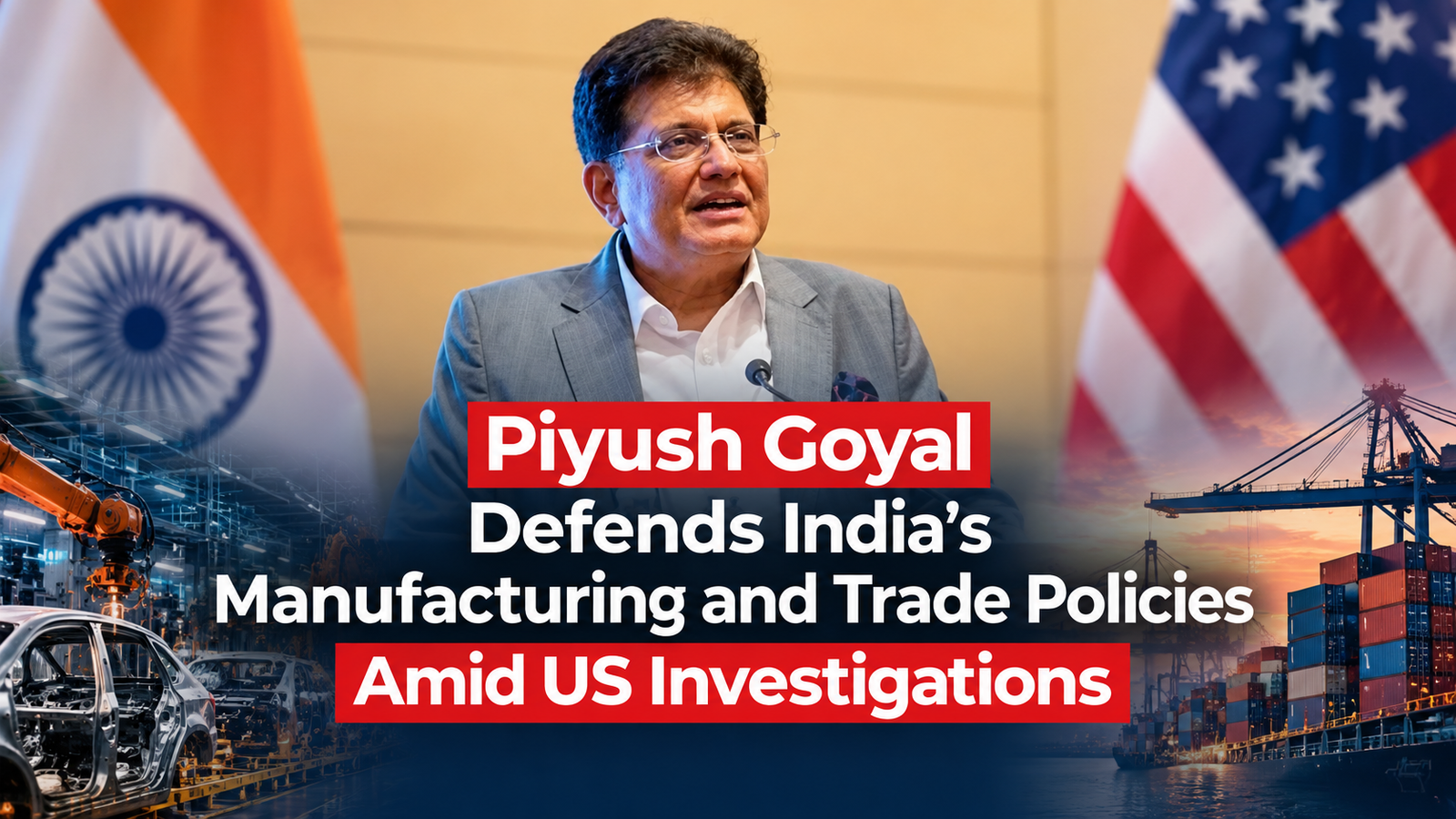
India’s Commerce and Industry Minister Piyush Goyal has defended the country’s manufacturing practices and trade policies amid investigations by the United States into allegations concerning forced labour and excess industrial capacity. The developments have brought renewed attention to India’s position in global trade, the competitiveness of its manufacturing sector and the economic relationship between New Delhi and Washington.
The investigations come at a time when countries are increasingly examining the origin of imported goods, production methods and the impact of industrial policies on international markets. For India, these issues are particularly important as the country continues to expand its manufacturing capabilities, attract foreign investment and strengthen its participation in global supply chains. The outcome of the US investigations could influence how Indian products are assessed in the American market and how businesses prepare for potential changes in trade requirements.
Goyal has emphasised the importance of applying internationally recognised trade rules when examining allegations involving manufacturing and labour practices. India’s position is that concerns affecting international commerce should be evaluated on the basis of verifiable evidence and established procedures. Such an approach, the minister has argued, is necessary to ensure that trade-related investigations do not unfairly affect legitimate commercial activities or create unnecessary barriers for exporters.
The issue of excess industrial capacity is closely linked to global competition in manufacturing. When production in a particular industry expands faster than demand, concerns can emerge over pricing, market competition and the impact on manufacturers in other countries. Governments may respond by reviewing imports, examining subsidies or considering trade measures to protect domestic industries. However, such actions can also create uncertainty for businesses operating across borders, particularly when the measures affect multiple sectors or trading partners.
Forced labour allegations raise a separate but equally significant concern for international businesses. Governments and companies face increasing scrutiny over labour conditions, sourcing practices and the transparency of their supply chains. India has maintained its opposition to forced labour, while also stressing the importance of addressing such concerns through recognised legal and trade frameworks. For exporters, compliance with labour standards, documentation requirements and international sourcing regulations is becoming an increasingly important part of doing business globally.
The investigations could have implications for Indian companies that rely on the United States as an export destination. Depending on the findings and any subsequent action, businesses may need to review their sourcing arrangements, production processes, compliance systems and export strategies. Additional restrictions or changes in import requirements could increase operating costs, affect delivery schedules or influence the competitiveness of products entering the US market. Companies with exposure to international supply chains may therefore need to prepare for different regulatory outcomes.
The uncertainty may also influence investment decisions. Manufacturers often consider the stability of trade policies, access to customers and the predictability of regulations when deciding where to establish facilities or expand production. If trade conditions become less predictable, some companies may delay investment decisions while assessing the potential financial and operational consequences. At the same time, businesses that can demonstrate compliance with international standards and adapt to changing market requirements may be better positioned to manage regulatory challenges.
India and the United States maintain commercial interests across several sectors, including manufacturing, technology, pharmaceuticals, energy and industrial goods. Their economic relationship involves not only the movement of products but also investment, technology partnerships and participation in wider global supply networks. Developments affecting trade regulations can therefore have consequences beyond individual exporters, influencing business confidence and the broader environment for bilateral commerce.
For Indian manufacturers, the situation highlights the importance of strengthening production capabilities while maintaining transparent business practices and compliance with international standards. Companies seeking to expand their presence in overseas markets may need to pay closer attention to labour documentation, product origin, supply-chain transparency and changing import regulations. These measures can help businesses prepare for greater scrutiny while maintaining access to international customers.
The eventual impact will depend on the findings of the US investigations and any measures that follow. Until further decisions are announced, exporters, manufacturers and investors will be monitoring developments for indications of how trade conditions may change. The issue underscores the importance of predictable international trade rules and constructive engagement between India and the United States as both countries navigate concerns involving manufacturing, labour standards and market access.