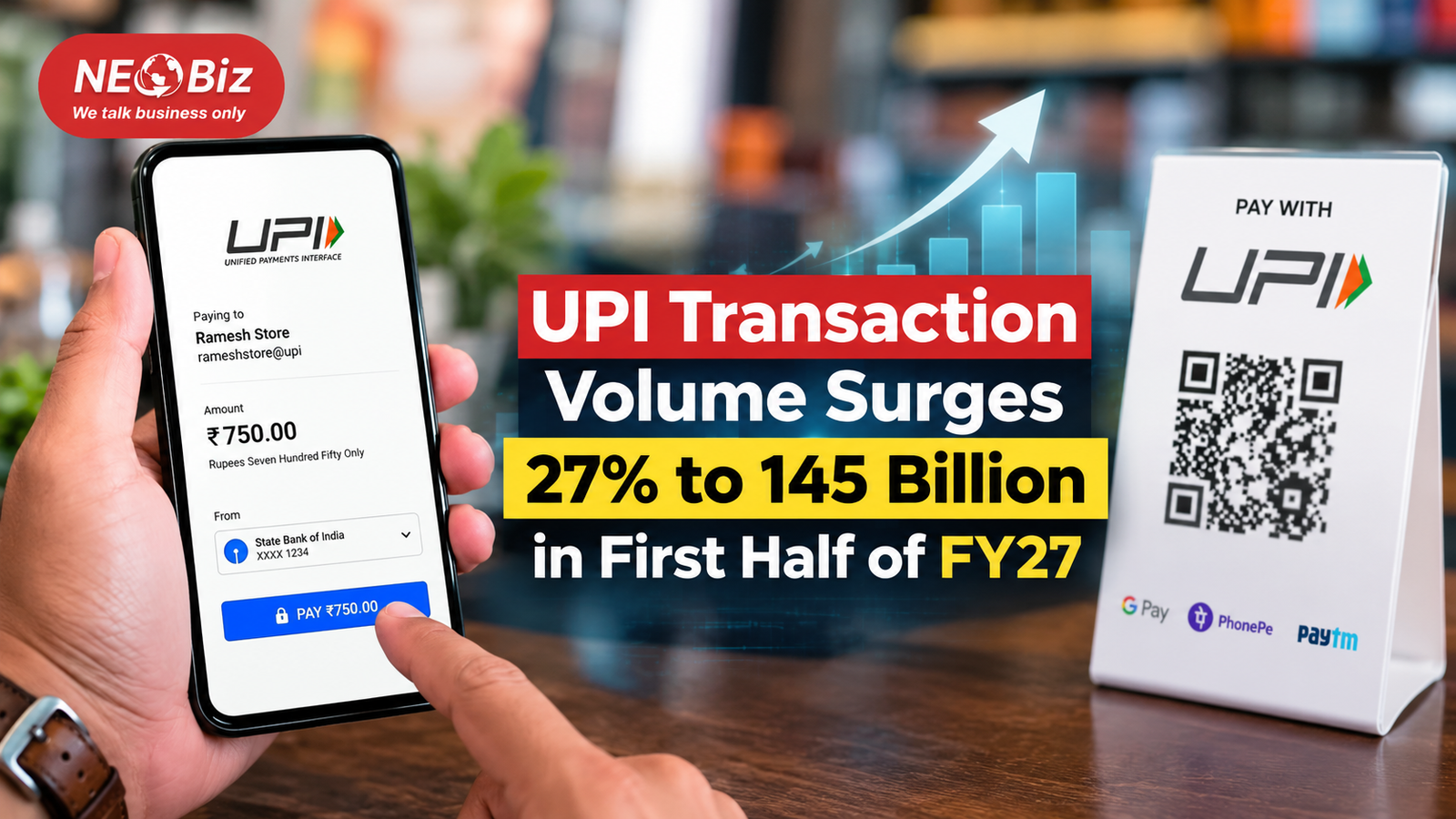
India’s Unified Payments Interface (UPI) recorded approximately 145 billion transactions during the first half of the financial year 2026–27, marking a 27% increase compared with the corresponding period last year. The growth highlights the continued expansion of digital payments across the country, as consumers, retailers, service providers and businesses increasingly rely on instant bank-to-bank transfers for everyday financial transactions.
According to data from the National Payments Corporation of India (NPCI), UPI transactions increased from approximately 114 billion in the first half of the previous financial year to 145 billion during the latest reporting period. The total value of transactions also registered significant growth, rising by around 20% to ₹177 lakh crore. The increase in both transaction volume and value reflects the growing role of digital payment infrastructure in India's financial ecosystem.
UPI has become an important component of India's digital economy by enabling users to transfer money directly between bank accounts through mobile applications. Its widespread adoption has transformed how individuals pay for groceries, transportation, utility bills, online purchases and other services. From large retail establishments to small neighbourhood shops, digital payments have become increasingly integrated into commercial activities across urban and rural markets.
The growth of UPI has also created opportunities for businesses operating in the financial technology sector. Banks, payment service providers, fintech companies and digital commerce platforms are benefiting from the expansion of electronic transactions. As more consumers adopt digital payment methods, companies are investing in payment technologies, merchant services, fraud prevention systems and financial products designed to support a growing digital customer base.
Small businesses and local retailers have also benefited from the accessibility of QR-code-based payments. Merchants can accept payments without requiring expensive point-of-sale equipment, allowing even small establishments to participate in the digital economy. Faster payment processing can simplify transactions, reduce dependence on cash handling and provide businesses with digital records that support bookkeeping and financial management.
The expansion of UPI has additionally supported the development of digital commerce in India. Online marketplaces, food delivery services, transportation platforms and other internet-based businesses increasingly depend on seamless payment systems to complete customer transactions. The availability of instant payments has helped simplify the purchasing process and strengthened the connection between digital services and everyday consumer spending.
For the banking sector, rising UPI usage demonstrates the growing importance of reliable payment infrastructure capable of processing large transaction volumes. Financial institutions and technology providers must continue investing in system capacity, cybersecurity, customer protection and fraud detection to ensure that digital transactions remain secure and dependable. As the number of users increases, maintaining service reliability and protecting consumers from financial scams will remain important priorities.
Despite the expansion of digital payments, challenges persist, particularly in areas involving internet connectivity, digital literacy and awareness of online fraud. Consumers must remain cautious about sharing confidential banking information, entering their UPI PINs on unfamiliar platforms or responding to fraudulent payment requests. Continued public awareness and stronger security measures will be important in sustaining confidence in digital financial services.
The latest transaction figures underline UPI's growing significance in India's payments landscape. With digital transactions becoming a routine part of personal spending and business operations, the continued expansion of the platform is likely to remain an important development for banks, fintech companies, merchants and the wider economy. The growth also reflects India's broader shift towards technology-enabled financial services, where accessibility, speed and convenience are increasingly shaping the way money moves across the country.